

Temporomandibular Dysfunction
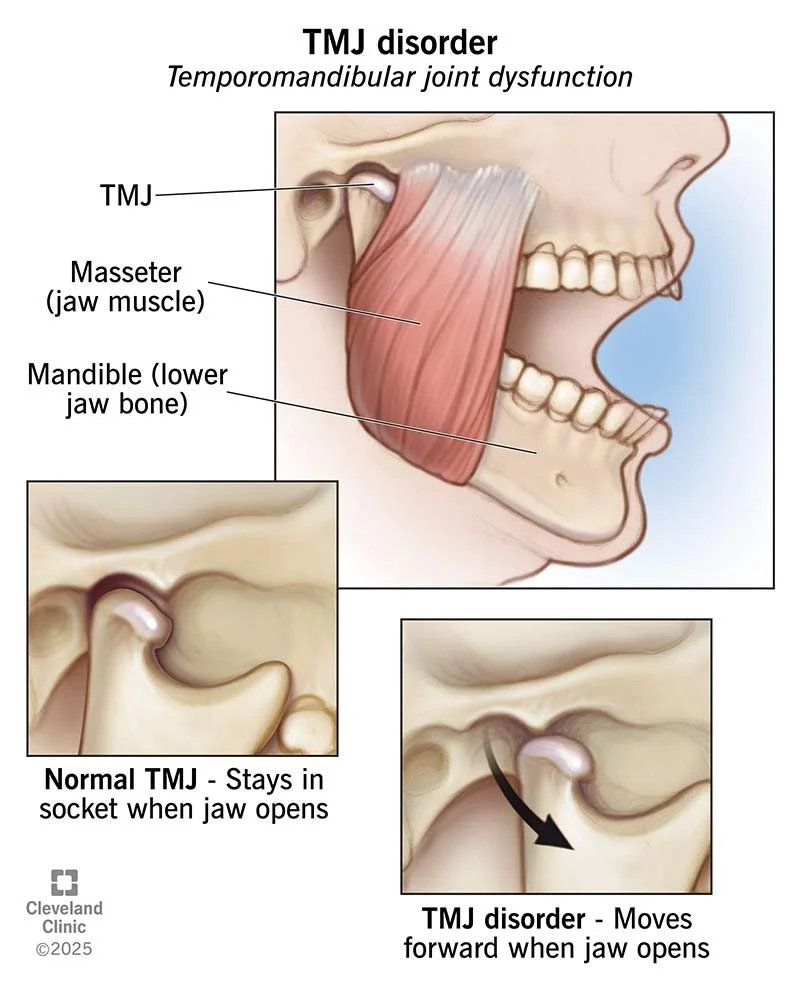
What is the Temporomandibular Dysfunction?
Irritation, misalignment, or strain of the muscles and/or ligaments of the temporomandibular joint
What are common symptoms?
Pain in the jaw, neck, eyes, head, teeth, ears, and difficulty with chewing, swallowing, coughing or even smiling

What causes this condition?
Posture, jaw alignment, clenching of jaw, neck tension, and trauma are all possible causes
How can physical therapy help?
Manual therapy for relief of muscle tension or mobilization of stiff joints
Exercises to correct posture and misalignment of the jaw and neck
Ergonomic and behavior modification