Dry Needling
What is Dry Needling?
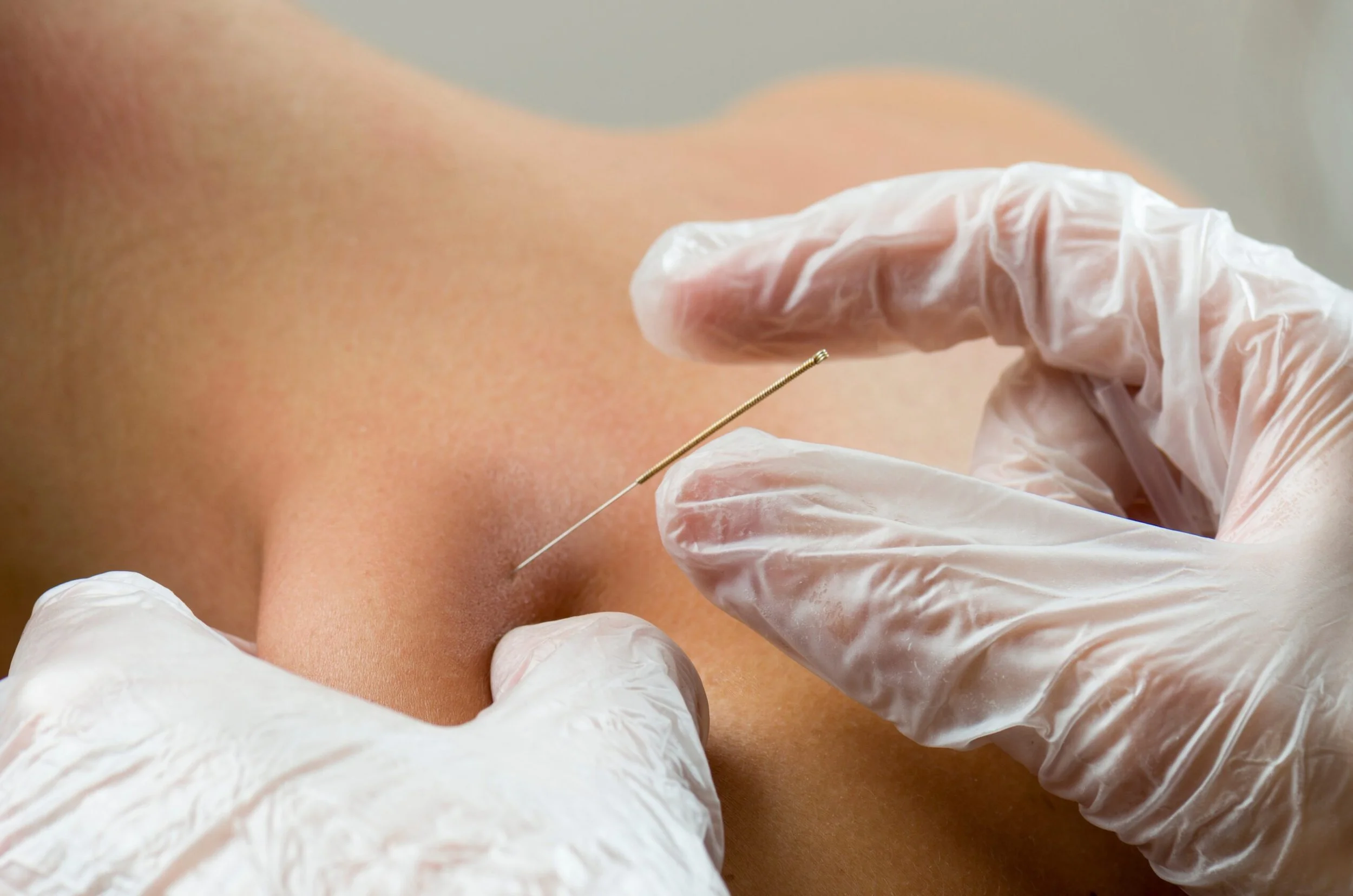
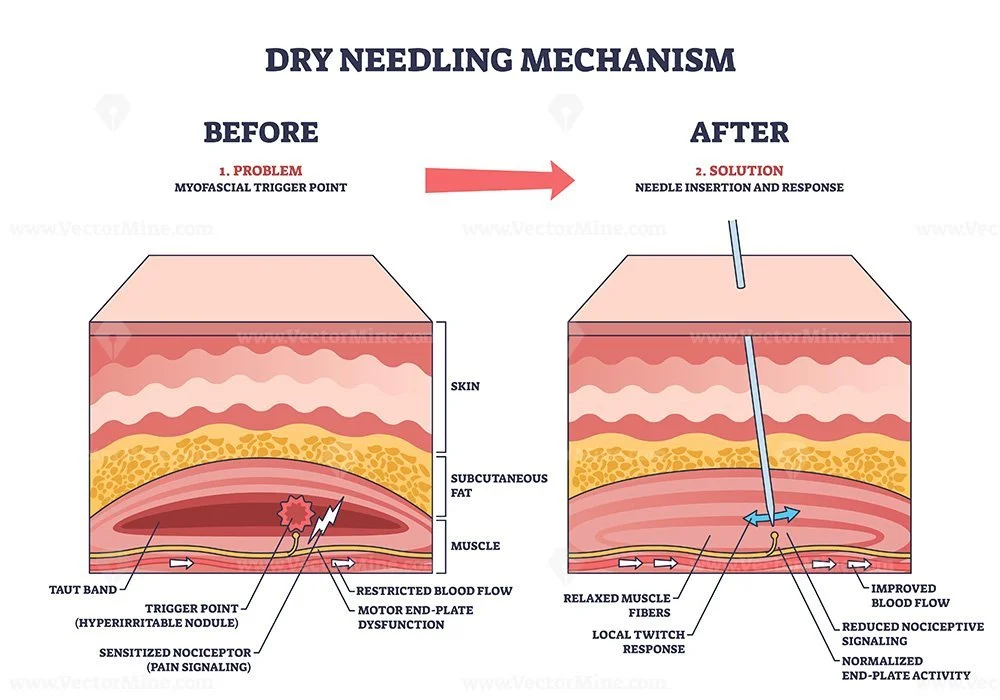
Dry needling uses a thin monofilament needle to target trigger points, or tight bands of muscle tissue, to help reduce pain and improve muscle function. This treatment can improve mobility, decrease muscle tension, and restore range of motion. Releasing trigger points may also help reduce referred symptoms such as headaches, dizziness, nausea, and sensations of ear pain or fullness
What types of problems can Dry Needling help with? Why?
While dry needling can be used throughout the body, it is especially effective for relieving tension in the neck and jaw muscles. Tightness in these areas can contribute to headaches, dizziness, nausea, and balance difficulties due to their close connection with the vestibular system and sensory input involved in posture and stability.
Does Dry Needling hurt?
The needles used in dry needling are extremely thin, and treatment is typically very well tolerated with minimal discomfort. You may feel a brief twitch, pressure, or cramping sensation as the trigger point releases, usually lasting only a second or two. Mild soreness or bruising can occur afterward, similar to muscle soreness after exercise, and typically resolves within 24 hours. Many patients notice immediate improvements in muscle tightness, mobility, and symptoms such as headaches.
Disclaimer: Dry needling is a physical therapy intervention and is not acupuncture. Treatment recommendations, including the use of dry needling, are based on an individualized physical therapy evaluation and the clinician's professional judgment. Dry needling may not be appropriate for every patient.